Mykonos Culture & Traditions: Local Guide 2026
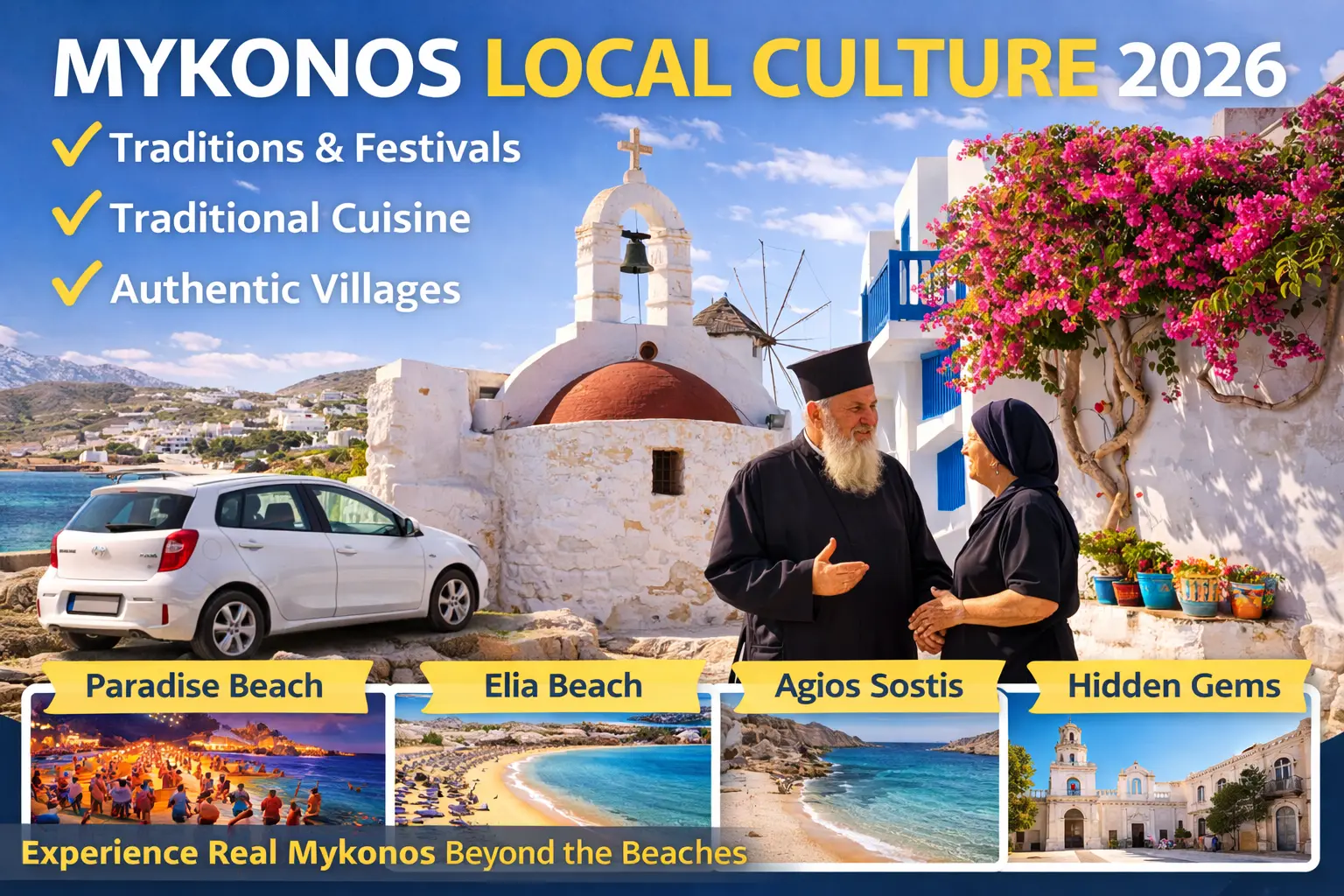
Understanding Mykonos Beyond the Party Scene
While Mykonos is famous worldwide for its vibrant nightlife and stunning beaches, the island has a rich cultural heritage that predates its modern reputation. Understanding and respecting local traditions enhances your visit and helps preserve the authentic character that makes Mykonos special.
With your own transportation, you can explore traditional villages and cultural sites at your own pace, experiencing the island's authentic side beyond the tourist hotspots.
Island History & Character
Ancient Roots
Mykonos has been inhabited since ancient times, serving as a supply station for the nearby sacred island of Delos, one of the most important archaeological sites in Greece. The island's strategic location in the Cyclades made it a crossroads of Mediterranean civilizations.
Venetian & Ottoman Influence
The island's architecture reflects centuries of Venetian and Ottoman rule. The iconic white-washed houses with colorful doors and windows, narrow winding streets designed to confuse pirates, and the famous windmills all tell stories of Mykonos' past.
Modern Transformation
In the 1960s, Mykonos transformed from a quiet fishing island to an international destination. Despite this change, many locals maintain traditional ways of life, especially in inland villages like Ano Mera.
Traditional Villages & Neighborhoods
Mykonos Town (Chora)
The island's capital is a maze of narrow streets lined with white cubic houses. The architecture is distinctly Cycladic, designed to reflect heat and protect from strong winds. Key areas include:
- Little Venice (Alefkandra): Historic waterfront houses built right on the sea
- Kastro: The medieval castle area with ancient foundations
- Matoyianni Street: Main shopping street, once a simple village lane
- Three Wells Square: Historic neighborhood center
Ano Mera Village
The island's second-largest settlement offers an authentic glimpse of traditional Mykonian life. The central square with its monastery and traditional tavernas remains the heart of local community life. Visit here to experience Mykonos as locals live it.
For authentic dining experiences, see our restaurants guide.
Religious Traditions & Festivals
Greek Orthodox Faith
The vast majority of Mykonians are Greek Orthodox, and religion plays a central role in island life. The island has over 400 small churches and chapels, many built by families as offerings or in gratitude.
Major Religious Celebrations
Easter (Pascha): The most important celebration in the Greek Orthodox calendar
- Holy Week services and processions
- Midnight Resurrection service on Saturday
- Traditional Easter Sunday feast with lamb and red eggs
- Fireworks and celebrations throughout the island
August 15 - Dormition of the Virgin Mary:
- Major feast day celebrated across Greece
- Special services at Panagia Tourliani Monastery in Ano Mera
- Traditional music, dancing, and feasting
- Many Greeks return to their home islands for this celebration
Name Days:
- More important than birthdays in Greek culture
- Each saint's feast day is celebrated by those named after them
- Open house tradition - friends visit without invitation
Local Patron Saints
Panagia Paraportiani: Mykonos' most famous church, a complex of five churches built over centuries
Panagia Tourliani: 16th-century monastery in Ano Mera, the island's spiritual center
Traditional Customs & Etiquette
Greetings & Social Interaction
- Kalimera (Good morning): Used until early afternoon
- Kalispera (Good evening): Used from afternoon onwards
- Yassas (Hello/Goodbye): Formal greeting
- Yassou: Informal version for friends
- Greeks often greet strangers in passing, especially in villages
- Handshakes common for formal introductions
- Close friends greet with kisses on both cheeks
Dining Customs
- Meals are social events, not rushed
- It's polite to say "Kali Orexi" (Bon Appétit) before eating
- Sharing dishes is common and encouraged
- Leaving a small amount of food shows you're satisfied
- Tipping 5-10% is appreciated but not obligatory
- Dinner often starts late (9-10 PM or later)
Church Etiquette
- Dress modestly - shoulders and knees covered
- Women may need to cover their heads in some churches
- Speak quietly and respectfully
- Photography may be restricted - ask first
- Don't visit during services unless participating
- Small donations appreciated for candles and upkeep
General Social Norms
- Greeks value hospitality (philoxenia) highly
- Refusing offered food or drink can be seen as rude
- Punctuality is more relaxed than Northern European standards
- Direct eye contact shows honesty and respect
- Personal space is smaller than in some cultures
- Loud conversation is normal and not considered rude
Traditional Cuisine & Food Culture
Local Specialties
Kopanisti: Spicy local cheese, a Mykonian specialty
Louza: Cured pork, similar to prosciutto
Amygdalota: Almond cookies, traditional sweet
Kremidopita: Onion pie, local savory dish
Xinotiri: Sour cheese used in local cooking
Traditional Dishes
- Moussaka: Layered eggplant and meat casserole
- Souvlaki: Grilled meat skewers
- Greek Salad (Horiatiki): Tomatoes, cucumber, feta, olives, onion
- Tzatziki: Yogurt, cucumber, and garlic dip
- Grilled Octopus: Island specialty
- Fresh Fish: Simply grilled with lemon and olive oil
Coffee Culture
Greek coffee (Ellinikos Kafes) is a ritual:
- Served in small cups with grounds at bottom
- Sipped slowly, never rushed
- Often accompanied by a glass of water
- Social activity, not just caffeine consumption
- Freddo espresso and freddo cappuccino popular in summer
Arts, Crafts & Architecture
Traditional Architecture
Cycladic Style:
- White-washed cubic houses
- Flat roofs for rainwater collection
- Small windows to keep interiors cool
- Colorful doors and window frames (blue, green, red)
- Narrow streets for shade and wind protection
Windmills:
- Iconic symbols of Mykonos
- Used historically for grinding wheat
- 16 windmills remain, mostly in Chora
- Some converted to museums or homes
Local Crafts
- Hand-woven textiles and rugs
- Ceramic pottery with traditional designs
- Silver jewelry with Cycladic motifs
- Wooden boat models
- Icon painting (religious art)
Music & Dance Traditions
Traditional Music
Greek folk music remains important in local celebrations:
- Bouzouki (stringed instrument) is central
- Baglamas (smaller bouzouki)
- Clarinet and violin also common
- Songs often tell stories of love, loss, and island life
Traditional Dances
Syrtos: Circle dance, most common at celebrations
Kalamatianos: Twelve-step circle dance
Ballos: Couples dance from the islands
Zeibekiko: Solo improvised dance, often emotional
At traditional festivals (panigiria), locals dance these dances late into the night. Visitors are often welcomed to join the circle.
Respecting Local Life
Residential Areas
- Keep noise down in residential neighborhoods, especially at night
- Don't enter private property for photos
- Respect "Private" and "No Entry" signs
- Many locals live in Mykonos Town - it's not just a tourist attraction
Beach Behavior
- Topless sunbathing is common and accepted on most beaches
- Full nudity only on designated beaches
- Don't take photos of people without permission
- Clean up after yourself - leave no trace
- Respect quiet zones on family beaches
Environmental Respect
- Water is precious - use it wisely
- Dispose of trash properly
- Don't pick wildflowers or disturb wildlife
- Stay on marked paths at archaeological sites
- Support local businesses when possible
Learning Basic Greek
Essential Phrases
- Efharisto (ef-ha-ree-STO): Thank you
- Parakalo (pa-ra-ka-LO): Please / You're welcome
- Ne / Ohi (neh / OH-hee): Yes / No
- Signomi (see-GNO-mee): Excuse me / Sorry
- Poso kani? (PO-so KA-nee): How much does it cost?
- Den katalaveno (then ka-ta-la-VE-no): I don't understand
- Milas Anglika? (mee-LAS ang-lee-KA): Do you speak English?
Even attempting a few words in Greek is greatly appreciated by locals and shows respect for their culture.
Cultural Sites to Visit
Must-See Cultural Attractions
Panagia Paraportiani Church: Architectural marvel, symbol of Mykonos
Panagia Tourliani Monastery (Ano Mera): Beautiful 16th-century monastery
Archaeological Museum: Artifacts from nearby Delos
Folklore Museum: Traditional Mykonian life and crafts
Maritime Museum: Island's seafaring history
Windmills of Kato Mili: Iconic photo spot with historical significance
Day Trip to Delos
The sacred island of Delos, birthplace of Apollo and Artemis in Greek mythology, is a UNESCO World Heritage site accessible by boat from Mykonos. This archaeological wonder offers insight into ancient Greek civilization and religion.
For more cultural exploration ideas, check our hidden gems guide and ultimate tour guide.
Shopping for Authentic Goods
What to Buy
- Local honey and herbs
- Kopanisti cheese (if you can transport it)
- Greek olive oil and olives
- Traditional ceramics and pottery
- Hand-woven textiles
- Natural sea sponges
- Greek wine and spirits (ouzo, tsipouro)
- Handmade jewelry with Greek motifs
Supporting Local Artisans
- Look for "Made in Greece" labels
- Ask about the origin of products
- Visit workshops where you can see items being made
- Shop in Ano Mera for more authentic, less touristy options
- Farmers' markets offer local produce and products
Seasonal Cultural Events
Summer Cultural Program
Mykonos hosts various cultural events during summer:
- Classical music concerts
- Art exhibitions
- Theater performances
- Film screenings
- Traditional dance performances
Religious Festivals (Panigiria)
Throughout summer, various churches hold festivals with:
- Religious services
- Traditional music and dancing
- Local food and wine
- Community gathering
- Visitors often welcome to participate
Conclusion
Understanding and respecting Mykonos' rich cultural heritage enhances your visit and helps preserve the authentic character that makes the island special. Beyond the beaches and nightlife, Mykonos offers a fascinating glimpse into Greek island life, ancient history, and enduring traditions.
With a rental car from ONE Rent, you can explore traditional villages, attend local festivals, and discover the cultural treasures that make Mykonos more than just a party destination. Approach the island with curiosity and respect, and you'll experience the warm hospitality and rich traditions that define authentic Mykonos.
For more authentic experiences, explore our dining guide for traditional tavernas and our complete tour guide for cultural sites and hidden gems.